

 Sofa Fabric Cleaning in Singapore: How to Keep Your Sofa Fresh, Clean and Stain-Free
A sofa gets dirty in ways that you may not notice immediately. Dust settles into the fabric, food stains leave tiny rings, and the parts of the sofa that we sit on most often start looking a little different from the rest. Sofa fabric cleaning in Singapore can handle this, but it has to match your sofa's fabric and condition.
Why Does a Sofa Start Looking Dirty?
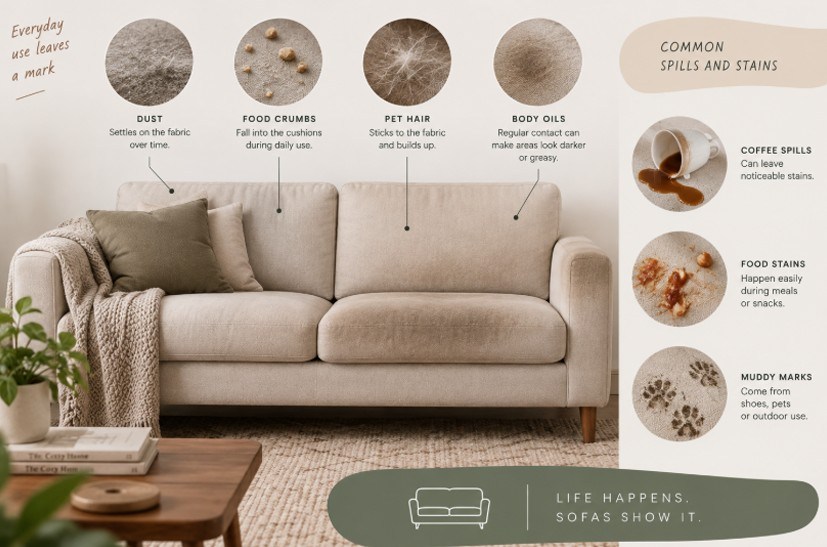
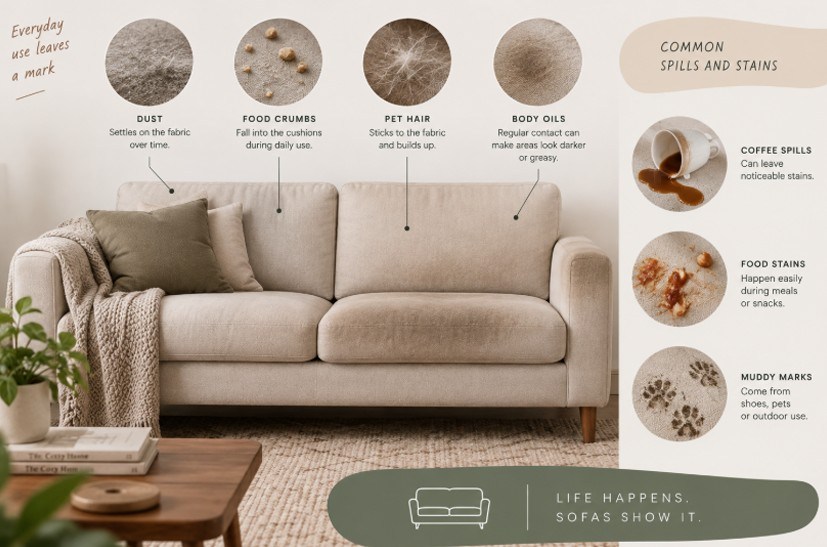
You do not need a major spill for a sofa to look tired. Regular sitting, dust, food crumbs, pet hair and body oils can all build up over time.
The seat usually shows it first. Armrests and headrests can also become darker or slightly greasy from frequent contact.
Then there are the obvious problems: coffee spills, food stains, muddy marks and whatever else happens to land on the sofa during the day.
How Often Does a Sofa Actually Need Cleaning?
That depends on how much use it gets. A sofa in a busy family home will need attention more often than one that is used occasionally. Pets, children, open windows and eating on the sofa can all add to the amount of cleaning it needs.
Vacuuming regularly takes care of loose dust and crumbs. A deeper clean is worth considering when the fabric starts looking dull, feels dirty or has marks that vacuuming cannot remove. This is where sofa fabric cleaning in Singapore can be useful.
You do not need to wait until the sofa looks visibly dirty, either. By then, some dirt may already have worked its way into the fabric.
What Should You Do About a Fresh Spill?
Do not leave it sitting there. Blot the liquid with a clean cloth and deal with any solid food before it gets pushed into the fabric. Rubbing the area hard can spread the stain and disturb the surface of the upholstery.
Be careful with household cleaning products, too. A product that works on a kitchen surface may not be suitable for sofa fabric.
For sofa fabric cleaning in Singapore, the type of fabric needs to be considered before choosing a cleaning method. A delicate material and a heavy upholstery fabric will not necessarily respond in the same way.
Can You Clean Every Sofa Fabric the Same Way?
No. That is one of the easiest mistakes to make. Some fabrics can handle more moisture, while others may develop marks, changes in texture or colour when they are treated incorrectly. Removable covers may also have different care instructions from fixed upholstery.
Check the label before trying anything new. If there is no clear information, it is better to find out what the material can handle than to test a strong product on the most visible part of the sofa.
What Can You Do Between Proper Cleanings?

You do not need to do much. A few regular habits can keep the sofa from getting heavily soiled:
- Vacuum the seats and gaps between cushions.
- Pick up crumbs instead of brushing them further into the fabric.
- Blot spills when they happen.
- Wash removable covers only according to their care instructions.
- Check the seams and edges for loose threads or small tears.
The last point is easy to overlook. A small tear is much easier to deal with before it becomes a large one.
When Is the Problem More Than Dirt?
Sometimes a sofa looks old even after it has been cleaned. That can happen when the fabric has faded, become thin or started fraying. A permanent stain can also remain even when the rest of the sofa is clean.
There is no point treating worn fabric as though it is simply dirty. At that stage, you need to look at whether the upholstery itself needs attention.
When Does Upholstery Fabric Replacement Make Sense?
Upholstery fabric replacement can be considered when the existing material has widespread wear, heavy staining or damage that cannot reasonably be dealt with through cleaning.
It can also change the appearance of a sofa that is still structurally usable. You may want a different colour, texture or material without getting rid of the entire piece of furniture.
The new fabric needs to suit the way the sofa is used. A sofa that gets used every day needs something that can cope with regular sitting and handling. A decorative sofa has different requirements.
What If Only One Part of the Sofa Is Damaged?
You may not need to replace everything. A loose seam, small tear or damaged patch can sometimes be dealt with separately. Sofa fabric repair in Singapore is worth considering when the damage is limited and the rest of the upholstery is still in reasonable condition.
Look at the surrounding fabric as well. If the material around the tear is already weak or worn, repairing one small section may not solve the wider problem.
Should You Repair the Sofa or Replace the Fabric?
Look beyond the damaged spot. The condition of the rest of the sofa will tell you much more.
| What to Look At | What It Tells You |
|---|---|
| Small tear | A local repair may be enough. |
| Loose seam | Check whether the surrounding fabric is still strong. |
| One stained area | Cleaning may be worth trying first. |
| Several worn areas | The fabric may need more extensive work. |
| Faded upholstery | Consider whether changing the fabric makes more sense. |
| Damaged frame | The problem may not be limited to the upholstery. |
| Worn cushioning | Check the inside of the sofa before changing the outer fabric. |
| Everyday use | Choose materials based on how much handling the sofa gets. |
Can an Old Sofa Still Be Worth Keeping?

Yes, especially when the main problem is the upholstery. A sofa with a usable frame and cushioning does not necessarily need to be thrown out because the fabric looks tired. Upholstery fabric replacement can give the piece a different look while keeping the existing furniture.
On the other hand, changing the fabric will not fix a damaged frame or badly worn cushioning. Those things need to be checked before deciding what work is actually worthwhile.
What Should You Check Before Getting the Sofa Worked On?
Start with the fabric, not the solution you already have in mind. If there is only a stain, cleaning may be enough. If there is a small tear, sofa fabric repair in Singapore may be worth discussing. If the upholstery is worn across several areas, replacement may make more sense.
Also consider how the sofa is used, whether the cushions and frame are still in usable condition, and what sort of fabric you want going forward.
Jia Xing can help with sofa upholstery work, including fabric-related cleaning, repairs and replacement. The important part is figuring out what the sofa actually needs before deciding on the work.
A sofa does not need to be spotless at all times to stay in good condition. Deal with spills early, remove everyday dust and pay attention when the fabric starts changing. For households considering sofa fabric cleaning in Singapore, that basic approach can go a long way.
 Home|
About Us|
Our Services|
Our Products|
Curtains|
Work Gallery|
Blog|
Contact Us|
Sitemap | Our Partner
Copyright © 2014 - 2026 Jia Xing Furniture & Furnishings Pte Ltd. All rights reserved
Website Design by iClick Media.
